


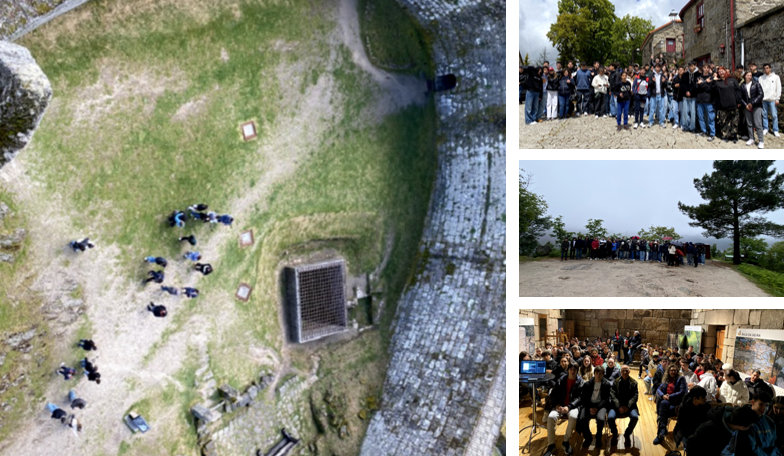
No dia 2 de maio, logo pela manhã, os alunos dos 10º A, B, C e 5 alunas do 10º F, da Escola Secundária Ferreira de Castro, acompanhados dos seus professores Alexandra Esteves, Ângela Costa, Carla Mariano, Manuel Alberto, Paula Catela e Paulo Gião partiram rumo à exploração de Montalegre e do Parque Nacional Peneda Gerês.
Durante o período da manhã o grupo visitou o Ecomuseu do Barroso e o Castelo de Montalegre. Algumas opiniões dos alunos:
“O museu retrata bem aquilo que Montalegre tem de melhor. Quadros bem pintados, acessórios característicos das pessoas da terra, trajes típicos da região, utensílios, sementes e comidas tradicionais. A palestra com vídeo da região foi agradável e elucidativa.
“Foi muito bom subir percorrer o castelo e subir à Torre de Menagem e à Torre Furada pois ficámos a conhecer mais da história do castelo que foi construído a uma altitude de 980 metros acima do nível do mar no topo de um monte granítico. Além disso, a Torre de Menagem é um miradouro de excelência para a Serra do Gerês, mas também para as vizinhas terras da Galiza.
O castelo, de planta quadrada, datado do séc. XIII, é constituído por quatro torres ligadas entre si por muralhas imponentes e em cujo centro está uma ampla praça de armas. A cisterna existente nesta praça é extremamente profunda, forrada de cantaria, destinada a conter milhões de pipas de águas pluviais. À sede não parece possível que a guarnição viesse a render-se em caso de cerco por mais duradouro que fosse!”
Após a necessária e desejada pausa para o repasto no belíssimo Parque das Merendas, e com as forças já retemperadas, eis-los rumando em direção à Barragem do Alto do Rabagão. Lá um técnico da EDP explicou o funcionamento da barragem, mas pouco se pode observar da mesma no espaço exterior, tanto era o vento que fazia com que os pés se levantassem do chão.
O fim de tarde e início de noite foi passado em grande camaradagem com muitos jogos de Uno.
Na manhã seguinte o tempo continuou a não ajudar, pelo que não foi possível fazer a caminhada pelo Gerês para melhor conhecer a sua geologia, geomorfologia e biodiversidade. Estas ficaram-se a conhecer através de vídeos e de uma palestra, bem como pela visita ao Núcleo Museológico do Campo do Gerês. Os alunos estiveram muito atentos às explicações do guia, e o que mais os impressionou foi a maqueta dinâmica da Serra do Gerês com a falha geológica do Gerês-Lobios (Espanha). Esta falha após a formação do Pangeia levou a uma fraturação tardia que cortou e deslocou os granitos da região. A falha possui uma direção NNE-SSW, sendo responsável pela deslocação dos vales dos rios Cávado e Homem e pelas nascentes termais da Vila do Gerês e do rio Caldo (Espanha). Saber que as águas quentes que hoje emergem infiltraram-se há 900 -1000 anos foi surpreendente!
À tarde visitou-se as Caldas do Gerês onde emergem as águas básicas e sulfurosas, com cerca de 50ªC. A maioria dos alunos não aprovou o sabor das mesmas…
As águas infiltram-se devido à permeabilidade de tipo fissural, conferida pela falha, acrescida devido à presença de numerosos filões de quartzo transversais ao acidente principal. A ascensão é facilitada pela barreira hidrogeológica criada por filões de rocha básica alterada o que confere propriedades importantes a estas águas, que têm indicações terapêuticas para doenças dos sistemas circulatório e digestivo, bem como para doenças metabólico-endócrinas, reumáticas e músculo-esqueléticas.
As condições climatéricas não ajudaram, mas mesmo assim os alunos classificaram a visita de estudo como muito boa a excelente, referindo que foi interessante e permitiu realizar e/ou consolidar aprendizagens.
 ALUNOS
  SIGA
SIGA  Prémio Literatura
  Facebook
  Youtube